Small workshop guide
In a small workshop, lifting equipment is used more often, by more people, and is rarely folded away. Routine matters more than any single purchase.
Standardise what you can
When several people use the same equipment, keep the path predictable: one known hoist, one leveler whose rating is above the loads you handle, and brackets and chains with clear markings. Write the lowest rating in the path somewhere everyone sees it.
An inspection routine
Use the maintenance checklist before each use, and the manufacturer’s periodic inspection schedule if the manual gives one. Any workplace rules that apply to you take precedence over this page.
Parts support
Workshop equipment wears faster. Ask sellers in writing whether seals, valves, casters and pins are available as spares before buying, and prefer listings that state model numbers and warranty fields. On this desk, model numbers appear on the SUNEX 5222, OTC 1812, OTC 7102 and YELLOW JACKET ASRF2750 listings, among others.
Space for a permanent layout
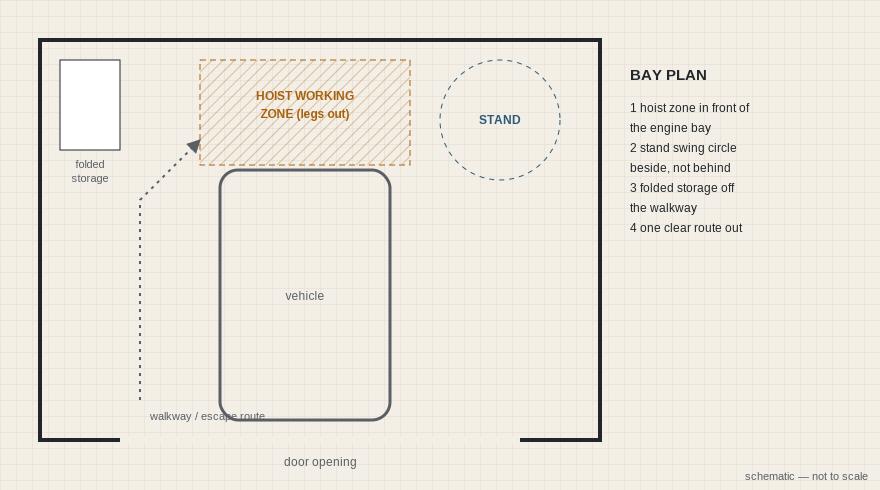
Mark a hoist parking spot, a stand area with its swing circle, and a clear route between bays. The Garage Planning pages cover footprint, height and floor.
Training
Everyone who uses the equipment should read its manual. Formal training requirements depend on where you work; this site is general consumer information and is not training.